
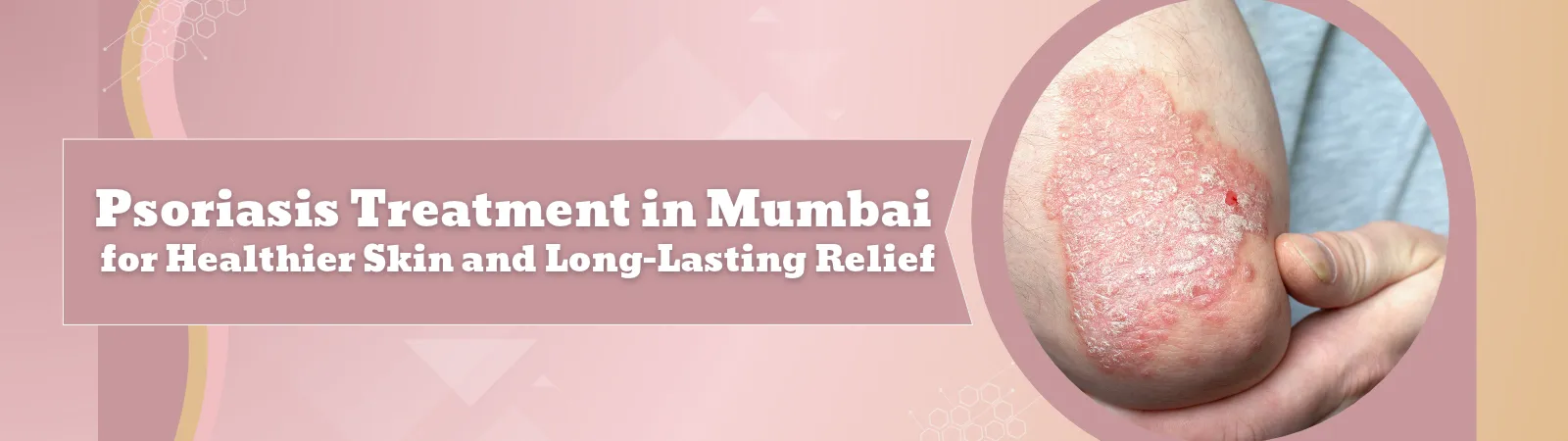
Psoriasis Treatment in Mumbai

Dr. Anju Methil
Dermatologist & CosmetologistFounder & Director — Skin and Shape Clinic, Andheri, Mumbai
- MBBS | DDV | MD — Dermatology
- 30+ Years of Clinical & Aesthetic Dermatology Experience
- Specialist in Acne Care, Cosmetic Dermatology & Anti-Aging Solutions
Psoriasis is a chronic skin disease marked by red and inflamed patches covered with silvery scales. These are associated with itching and irritation. Psoriasis Treatment in Mumbai by Dr. Anju Methil at Skin & Shape Clinic in Andheri aims to reduce inflammation and manage symptoms and flare-ups through personalised dermatological care. Dr. Methil evaluates each patient’s skin condition to determine appropriate treatment options.
Dr. Anju Methil, a noted dermatologist in Mumbai, states, “Living with psoriasis can be frustrating, especially when patches keep recurring or appear in places such as face, hands or scalp. With a proper treatment plan, symptoms can be managed and clear skin can be achieved.”
Dr. Methil’s approach focuses on understanding the severity of psoriasis, its potential triggers and choosing an appropriate treatment. Regular medical consultation helps to manage flare-ups and have healthier skin.
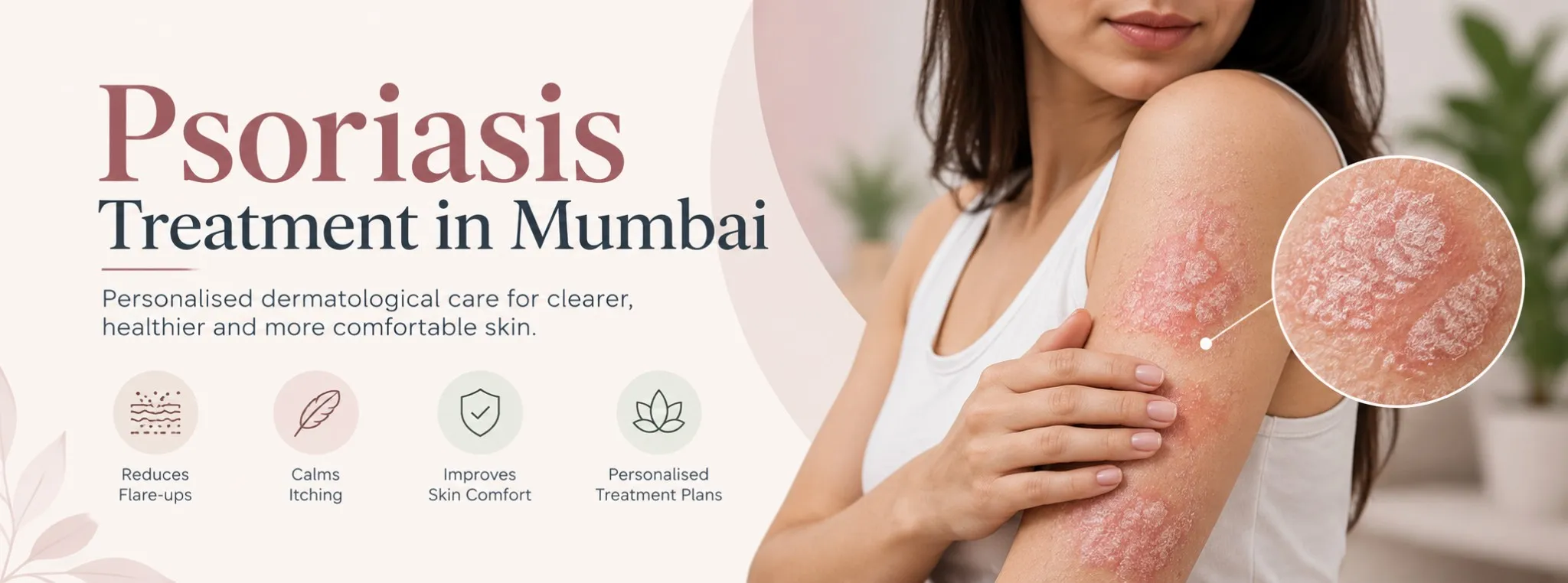
Types of Psoriasis Treated at Skin & Shape
Different people can suffer from psoriasis of different forms. Knowing the type of psoriasis can help identify proper ways of treating this skin condition. Here are the various forms that you must know.
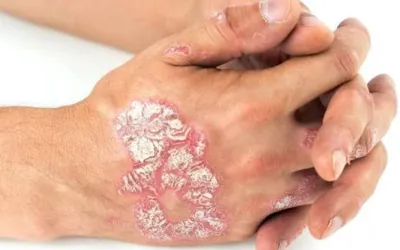
Plaque Psoriasis
This is the most common form, where one has patches that are raised and have silvery white flakes on their surface, usually on the elbows, knees and scalp.
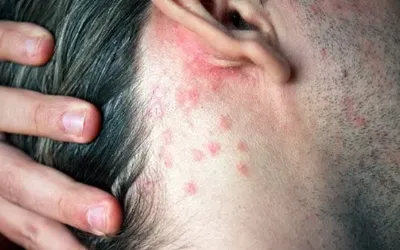
Guttate Psoriasis
It is in the form of small, drop shaped spots that usually appear after having throat infection due to Streptococcal bacteria.
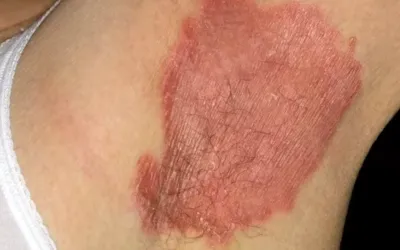
Inverse Psoriasis
It appears as patches in moist parts of the skin like those of the armpit, groins and under the breasts.
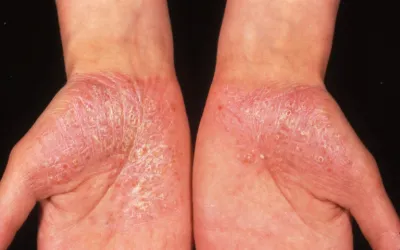
Pustular Psoriasis
Pus blisters occur surrounded with inflammatory skin patches.
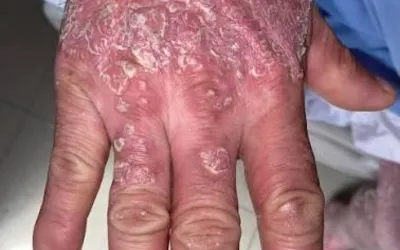
Erythrodermic Psoriasis
It involves redness and flaking in large amounts of skin. In such cases, medical attention is urgently required.
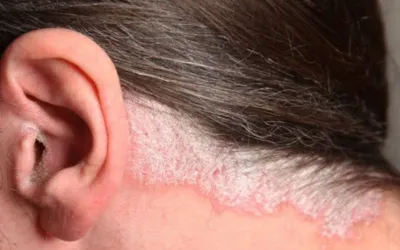
Scalp Psoriasis
It is characterized by thick scaling, inflammation and itching in the patches of the scalp and sometimes beyond.
Dr. Methil examines the appearance, location and size of these lesions to come up with the best form of treatment.
Concerned about recurring patches? Schedule a dermatological assessment to identify the type of psoriasis.
Common Areas Affected by Psoriasis
The site where psoriasis develops may impact daily comfort, treatment choices, and the level of treatment needed.
Let’s have a look at the common sites affected by psoriasis.
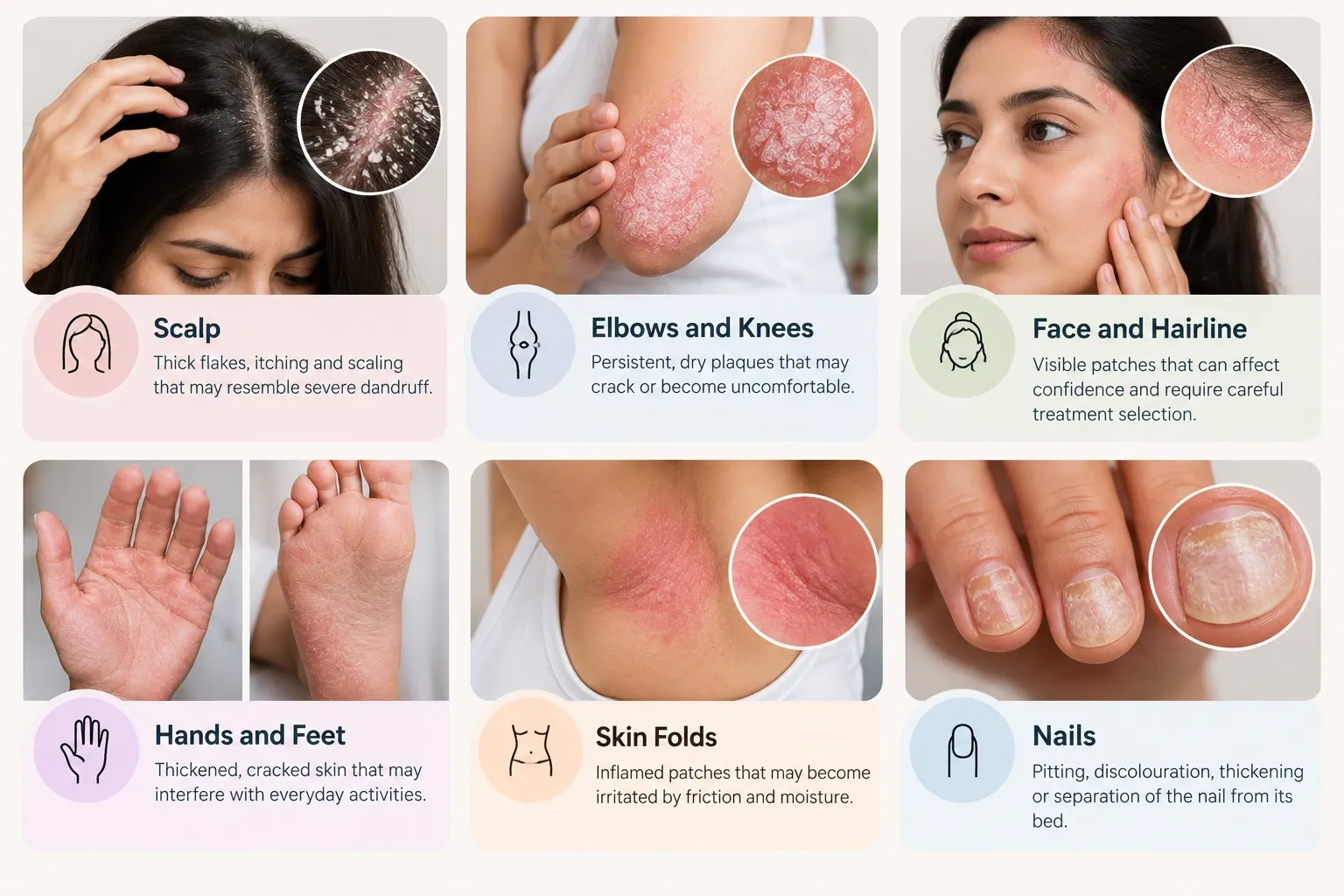
Multiple areas may be affected by psoriasis at once. Changes in nails and persistent joint pain or swelling require consultation with a dermatologist, as there is an association between psoriasis and psoriatic arthritis.
Signs and Symptoms of Psoriasis
Psoriasis can come and go with symptoms appearing at times followed by remission.
These are some common symptoms of psoriasis.
- Presence of red patches that have scales on them.
- Intense itching, burning, and soreness of skin.
- Extremely dry skin that develops cracks or may even bleed sometimes.
- Thickened, pitted and discolored nails.
- Occurrence of similar lesions in the same region repeatedly.
- In some patients, joint pain and stiffness is observed.
Psoriasis is an autoimmune disease and is not at all contagious.
Every patient may need a different approach. Here’s what the treatment journey may involve.
Psoriasis Treatment Course: What to Expect
Phototherapy may prove beneficial in certain cases but should not be done independently by means of unsupervised tanning or excessive sun exposure.
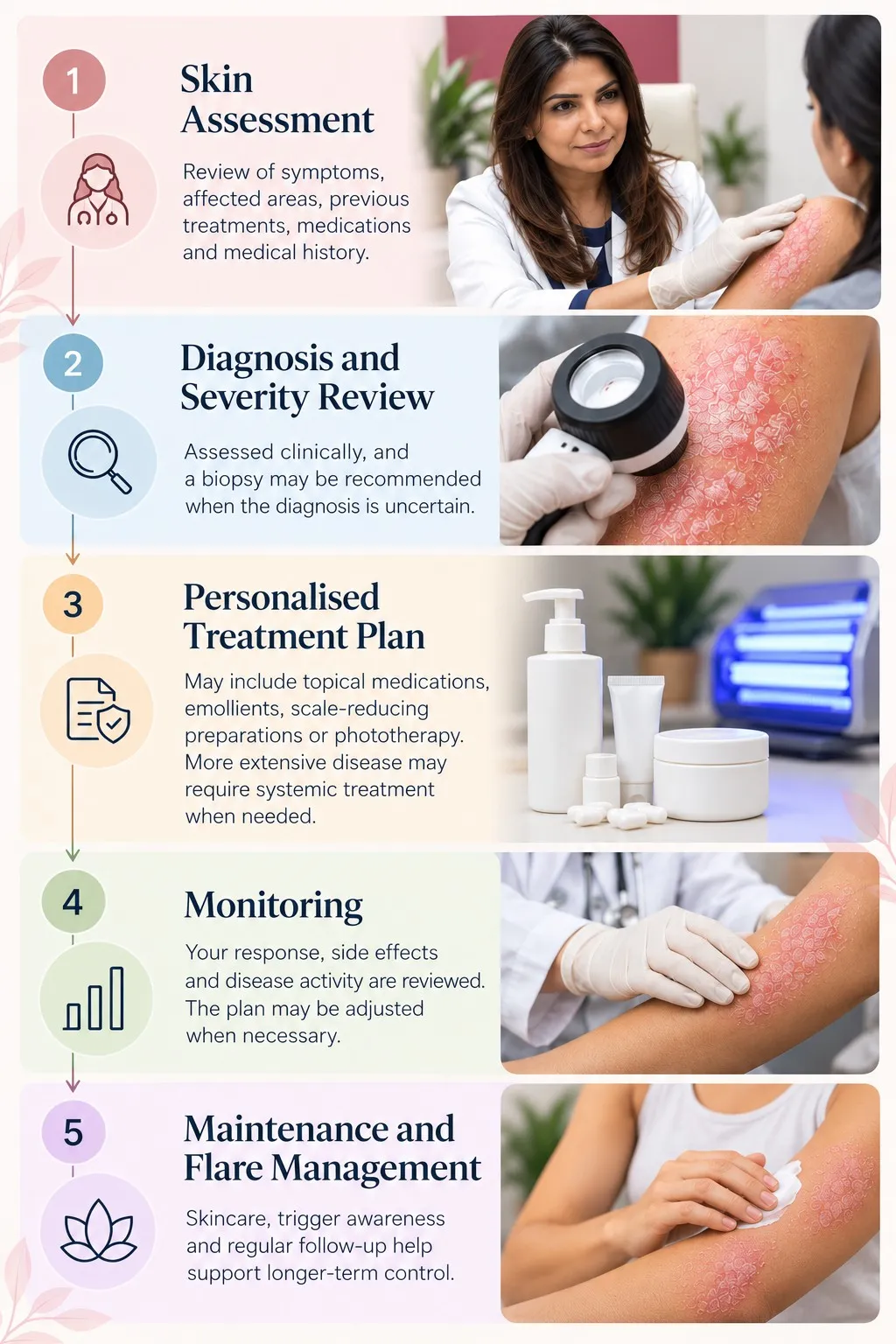
Treatment needs vary from patient to patient. Several factors determine the overall cost.
Psoriasis Treatment Cost in Mumbai
Treatment for psoriasis depends on the complexity of the disease and the type of therapy needed.
Below are the key determinants of cost involved.
- Degree and severity of psoriasis.
- Type of medication or treatment used.
- Number of consultations or sessions of phototherapy.
- If any testing is required.
- Treatment duration.
Topical, phototherapy and systemic drug treatments have their own costs. Biologic therapies may have a different cost compared to the conventional ones.
A correct estimate can be given after the assessment of the condition and the recommended treatment.
Not every scaly patch is psoriasis. A proper diagnosis helps distinguish similar conditions.
Psoriasis vs Other Skin Conditions
Psoriasis can resemble eczema, fungal infections, and seborrheic dermatitis. Distinguishing between them matters because their treatments differ.
Here is a quick comparison.
| Condition | Typical Appearance | Common Areas |
| Psoriasis | Well-defined red plaques with thick scales | Elbows, knees, scalp and nails |
| Eczema | Dry, itchy and inflamed skin | Hands, face and skin folds |
| Fungal infection | Often ring-shaped patches with a scaly edge | Body, groin or feet |
| Seborrhoeic dermatitis | Greasy or flaky scales with redness | Scalp, eyebrows and sides of the nose |
These patterns are general clues rather than a definitive diagnosis. Some conditions can overlap, and psoriasis may occur alongside other skin problems.
Not seeing enough improvement? Discuss your psoriasis symptoms and treatment options with an experienced skin specialist.
Frequently Asked Questions
There is no permanent cure for psoriasis, but with proper management, the symptoms can be controlled and clear or nearly clear skin can be achieved.
Most patients have phototherapy two or three times a week for several weeks, depending on the type, severity and response of psoriasis.
A patient can have clear or significantly reduced visible patches with the help of medication, although the disease may recur.
The condition is normally diagnosed by skin examination and a patient’s medical history by a dermatologist. At times a biopsy may be required to confirm the diagnosis.
Possible causes could be infection, skin injury, stress, medication, smoking, and excessive consumption of alcohol. Various reasons can act as triggers in different individuals.
Yes, stress might act as a trigger of psoriasis in some individuals.
No, because psoriasis is an autoimmune skin condition and cannot be transmitted by physical contact.
The codes of psoriasis fall under ICD-10 category L40. Examples include L40.0 – psoriasis vulgaris, L40.1 – generalized pustular psoriasis and L40.4 – guttate psoriasis.
Disclaimer: The information shared in this content is for educational purposes and not for promotional use.