

Laser Hair Removal for PCOS: A Pre-Treatment Guide
September 16, 2026
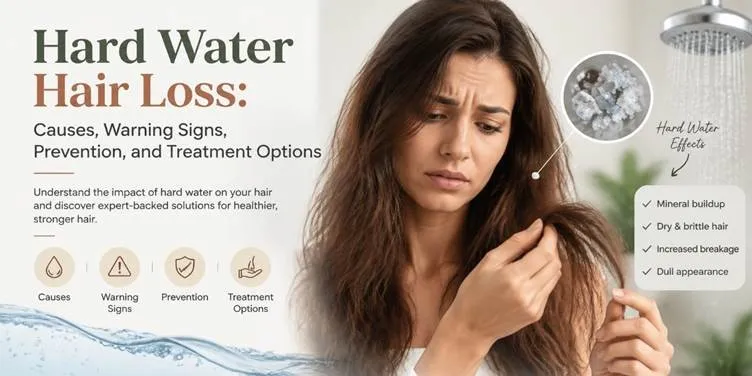
Hair loss is a commonly faced problem which can make any individual feel less confident in his/her looks. Apart from genetic, stress, hormonal and nutritional issues, environmental reasons can also affect the condition of hair. One of such problem is hard water hair loss, when hair can become dry, greasy, rough and prone to breakage due to mineral rich water.
According to Dr. Anju Methil, a renowned dermatologist in Mumbai, “Hard water does not directly cause permanent hair loss, but frequent use can weaken hair strands, making them more brittle and dry. Identifying the actual cause of hair fall can help choose the appropriate treatment method.”
At Skin & Shape Clinic, Dr. Anju Methil offers customized skin and hair care solutions to those who face hair-related problems. She specializes in identification of hair loss causes and offering personalized treatment. With her experience in dermatology and cosmetology, Dr. Methil assists her patients in finding a suitable hair loss treatment in Mumbai, including hard water hair loss.
Noticing changes in your hair after using hard water? Let’s explore how hard water affects hair health and what can help.
Can Hard Water Cause Hair Loss?
Calcium and magnesium — hard water contains high amounts of both. Follicles themselves rarely take permanent damage. What does happen: the outer layer of hair wears down with repeated exposure, leaving strands weaker over time.
Mineral buildup from hard water may:
- Reduce hair moisture.
- Make hair dry and frizzy.
- Cause scalp discomfort.
- Increase breakage.
- Make hair appear thinner.
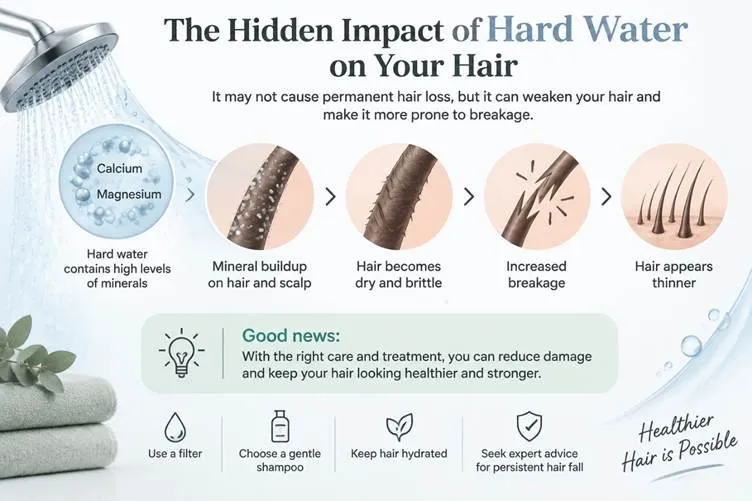
It is important to understand that hard water hair loss is mostly about damage and breakage, not permanent loss. If shedding continues even with better care, that’s a signal to seek professional evaluation to find the underlying cause.
Understanding the cause helps create a better hair care plan. Connect with a hair specialist for personalised guidance.
Why does hard water make hair feel dry and weak? Let’s dive into how mineral buildup affects hair quality and scalp health.
How Does Hard Water Cause Hair Fall and Hair Damage?
Hard water affects hair gradually by creating mineral deposits on the scalp and strands. These deposits can interfere with cleansing and reduce the hair’s ability to retain moisture.
What Makes Hard Water Harmful for Hair?
- Mineral buildup
Calcium and magnesium deposits can create a coating on hair, making it dull and difficult to manage.
- Reduced hydration
Hard water exposure may reduce moisture retention, leading to dryness and frizz.
- Scalp irritation
Mineral residue can contribute to itching and sensitivity, especially in people with delicate scalps.
- Product residue
Hard water may reduce shampoo effectiveness, causing buildup over time.
- Hair breakage
Dry and brittle strands are more likely to break during washing and styling.
A specialist can help determine whether hair concerns are caused by environmental factors or require medical treatment.
Are you noticing changes in your hair texture or appearance? Let’s discover the common signs of hard water-related hair damage.
What Are the Warning Signs of Hard Water Hair Damage?
The effects of hard water may develop slowly, making early signs easy to overlook.
Common symptoms include:
- Excessive hair fall during washing
- Dry and frizzy hair
- Dull appearance
- Rough texture
- Scalp itching
- Mineral buildup
- Increased tangling
- Difficulty maintaining smoothness
- More split ends
Many people confuse hair damage with actual hair loss. While hard water may weaken hair strands, continuous shedding may indicate other concerns such as hormonal imbalance, nutritional deficiency, or scalp disorders.
Could certain hair types be more affected by hard water exposure? Let’s discuss which individuals may experience greater sensitivity to mineral-rich water.
Who Is More Likely to Experience Hard Water Hair Problems?
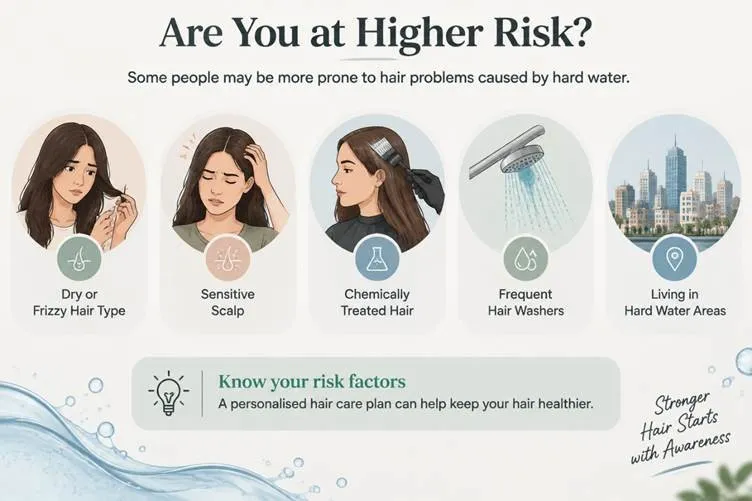
Hair type, existing scalp condition, day-to-day habits — all of it shapes how visibly someone’s affected.
An expert can help assess your scalp health and recommend suitable solutions.
Looking for simple ways to protect your hair from daily water exposure? Let’s explore practical steps that can help reduce hard water-related hair damage.
Best Ways to Prevent Hard Water Hair Loss
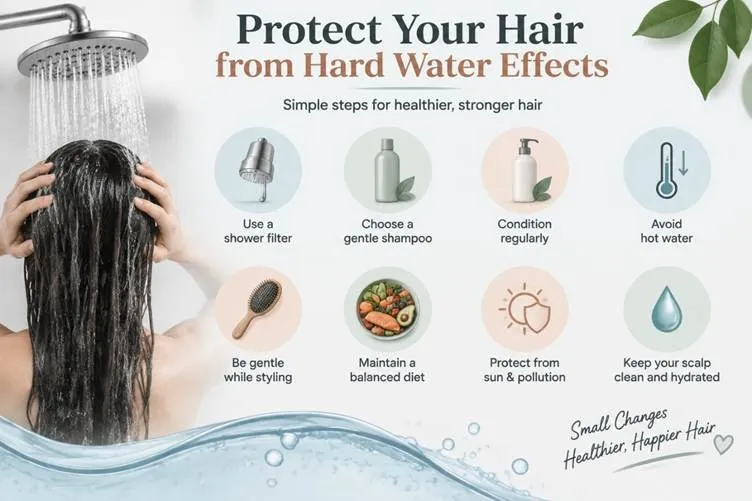
Although changing your water source may not always be possible, certain preventive measures can help maintain healthier hair and reduce dryness.
Helpful prevention tips include:
These habits may improve hair texture and reduce breakage. However, continued hair fall may require evaluation for other causes such as hormonal changes, nutritional deficiencies, or scalp conditions.
Want a routine built specifically around hard water? Here’s what tends to work.
Hard Water Hair Care Routine for Healthier Hair
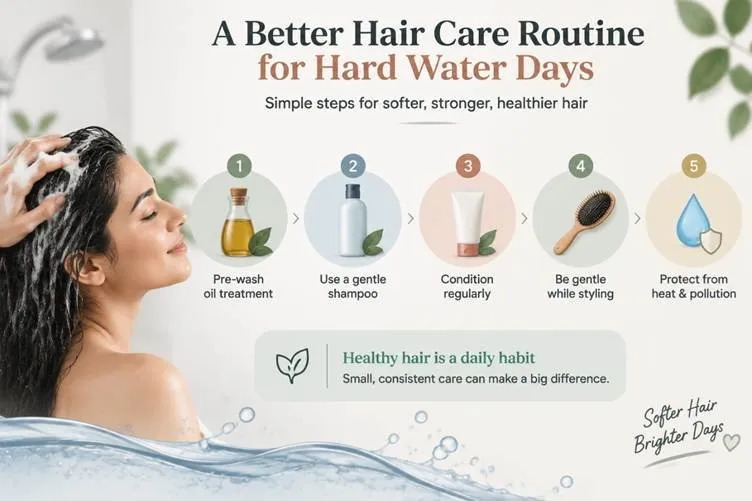
A consistent hair care routine can help reduce mineral buildup, improve softness, and protect hair from dryness caused by hard water exposure.
- Pre-wash protection
Applying a suitable hair oil before washing can help reduce moisture loss and protect hair strands from dryness.
- Use a suitable shampoo
A gentle shampoo helps cleanse the scalp without removing essential moisture. Clarifying shampoos can be used occasionally to remove buildup.
- Condition regularly
Conditioning after every wash helps improve smoothness, reduce tangling, and protect fragile hair.
- Maintain scalp hygiene
A clean scalp supports healthier hair growth. Persistent itching, irritation, or excessive buildup may require professional evaluation.
Follow protective habits
- Avoid excessive heat styling
- Use a wide-tooth comb
- Avoid tight hairstyles
- Protect hair from pollution and sun exposure
For ongoing hair concerns, consulting a seasoned dermatologist in Mumbai can help identify the right solution.
Can hair actually recover from hard water damage? Here’s what determines that.
Can Hard Water Damage Be Reversed?
Hard water-related damage can often be managed with the right approach. Since the damage mostly affects texture, moisture, and scalp comfort — not the follicle itself — reducing mineral exposure tends to bring gradual improvement.
Recovery depends on several factors:
- Duration of hard water exposure
- Existing damage level
- Scalp condition
- Current care habits
- Presence of underlying hair problems
Healthy follicles plus better daily care may reduce dryness and breakage. Continued thinning or heavy shedding despite that, though, points toward something needing medical attention rather than just a routine fix.
A professional assessment helps differentiate between surface-level damage and conditions requiring hair loss treatment.
Looking into more advanced options for ongoing hair fall? Here’s what’s available.
Treatment Options for Hard Water Hair Fall at Skin & Shape Clinic
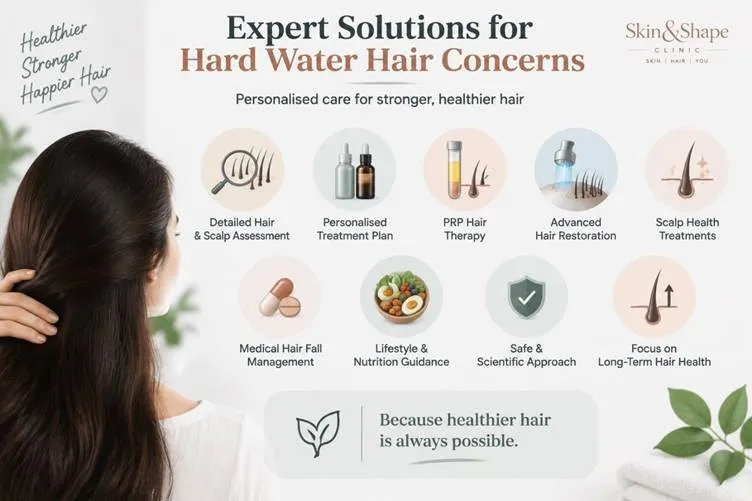
At Skin & Shape Clinic, Dr. Anju Methil focuses on identifying the root cause of hair loss before recommending treatment. Every plan is customised based on scalp health, hair condition, lifestyle factors, and individual goals.
Possible treatment approaches include:
Patients searching for hair fall treatment in Mumbai can benefit from a personalised approach rather than a one-size-fits-all solution.
Are you unsure whether your hair fall is normal or concerning? Let’s discuss the key differences between hard water damage and regular hair shedding.
Hard Water Hair Loss vs Normal Hair Fall: What Is the Difference?
| Feature | Hard Water Hair Damage | Normal Hair Fall |
| Main cause | Mineral buildup and dryness | Natural shedding, genetics, hormones, lifestyle |
| Hair texture | Rough, dry, frizzy | May remain normal |
| Scalp changes | Possible irritation and buildup | Depends on cause |
| Main concern | Breakage and weak strands | Hair shedding from roots |
| Follicle impact | Usually temporary effect | May affect growth cycle |
| Treatment focus | Hair protection and hydration | Cause-based medical treatment |
Could your daily habits be making hair damage worse? Let’s discover common mistakes that may increase dryness and breakage.
Common Mistakes That Can Worsen Hard Water Hair Damage
Avoid these habits:
- Washing hair excessively
- Using harsh cleansing products
- Skipping conditioner
- Applying frequent heat treatments
- Ignoring scalp irritation
- Using too many products together
- Delaying professional consultation despite increasing hair fall
Are you unsure when hair fall needs expert attention? Let’s discuss the signs that indicate it may be time to seek professional help.
When Should You Consult a Dermatologist for Hard Water Hair Loss?
Consult a dermatologist if you experience:
- Sudden increase in hair fall
- Visible thinning
- Bald patches
- Hair loss lasting several months
- Persistent scalp itching
- Severe dandruff or irritation
- No improvement despite better hair care
Early diagnosis can help identify the exact cause and improve treatment outcomes.
Why Choose Dr. Anju Methil for Hair Loss Treatment in Mumbai?
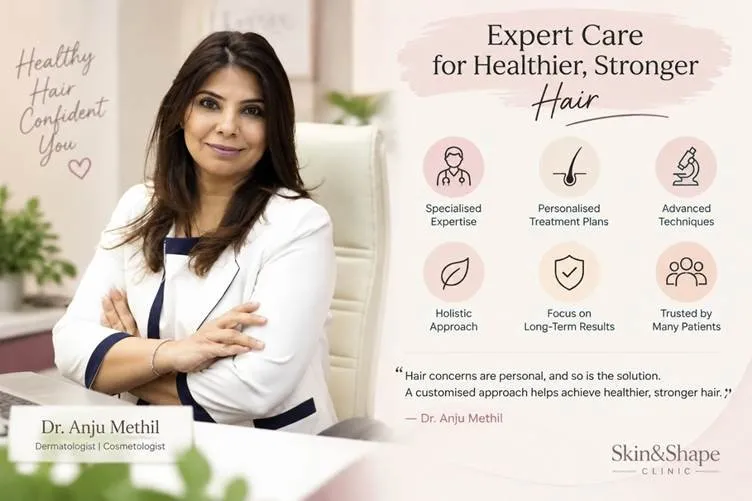
- Expert Hair and Scalp Evaluation
Dr. Anju Methil begins with a detailed assessment of scalp health, hair growth patterns, and possible triggers to understand the exact cause of hair loss.
- Advanced Hair Treatment Options
She offers evidence-based hair solutions that may include advanced therapies and personalised care approaches based on the patient’s needs.
- Focus on Root Cause Diagnosis
Instead of only managing visible hair fall, she focuses on identifying underlying factors such as scalp issues, lifestyle habits, nutritional deficiencies, or environmental triggers.
- Safe and Scientific Treatment Approach
Every recommended treatment is planned carefully, considering safety, suitability, and the individual’s medical history for better outcomes.
- Advanced Hair Restoration Guidance
From early hair thinning to more advanced hair concerns, Dr. Anju Methil helps patients explore suitable treatment options based on their condition.
- Complete Hair Health Support
Along with clinical treatments, guidance on hair care routines, scalp maintenance, and preventive measures helps support long-term hair wellness.
Patients searching for the best hair fall treatment in Mumbai can benefit from Dr. Anju Methil’s personalised approach, advanced techniques, and focus on achieving natural-looking results.
Healthy hair starts with expert evaluation and the right treatment strategy. Get in touch with a qualified hair specialist for personalised guidance and care.
Frequently Asked Questions
1. Can hard water cause permanent hair loss?
Not usually. It tends to cause dryness, buildup, and breakage — not lasting damage to the follicles themselves.
2. How does hard water affect hair?
Mineral buildup is the main culprit — it leaves hair dry, rough, frizzy, and harder to manage day to day.
3. Can a shower filter help with hard water hair problems?
A shower filter may reduce mineral exposure and improve hair texture.
4. Is hard water hair damage reversible?
Yes, proper care and suitable treatments can improve many effects of hard water damage.
5. Which treatment is best for hard water hair loss?
Depends on what’s actually causing it. Could be scalp care, medical therapy, or hair restoration, depending on the case.
6. Can hard water cause dandruff?
It may worsen dryness and irritation and often cause flaking.
7. Does hard water stop hair growth?
Hard water does not usually stop hair growth but may weaken hair strands.
References:
1. American Academy of Dermatology Association – Hair Loss
https://www.aad.org/public/diseases/hair-loss
2. Mayo Clinic – Hair Loss: Symptoms and Causes
https://www.mayoclinic.org/diseases-conditions/hair-loss
Disclaimer: The information shared in this content is for educational purposes and not for promotional use.